




• Become a member
  • FAQs
  • Contact
  • Facebook
  • Twitter
  • Youtube
  • Linkedin
  • Vimeo
IPAA South Australia
  • Membership
  • About
    • People
    • History
    • IPAA National
  • News
  • Resources
  • Events and Workshops
    • Upcoming events and workshops
    • On the Couch Series
    • Events archive
    • Event management services
  • Training
    • Training Calendar
    • Extended Series
    • Career Pathways
    • View All Courses
    • In-Agency Programs
    • Professional Development Vouchers
IPAA South Australia
  • Membership
  • About
    • People
    • History
    • IPAA National
  • News
  • Resources
  • Events and Workshops
    • Upcoming events and workshops
    • On the Couch Series
    • Events archive
    • Event management services
  • Training
    • Training Calendar
    • Extended Series
    • Career Pathways
    • View All Courses
    • In-Agency Programs
    • Professional Development Vouchers
  • Become a member
  • FAQs
  • Contact
  • Facebook
  • Twitter
  • Youtube
  • Linkedin
  • Vimeo
  • Home
  • Emerging Leader

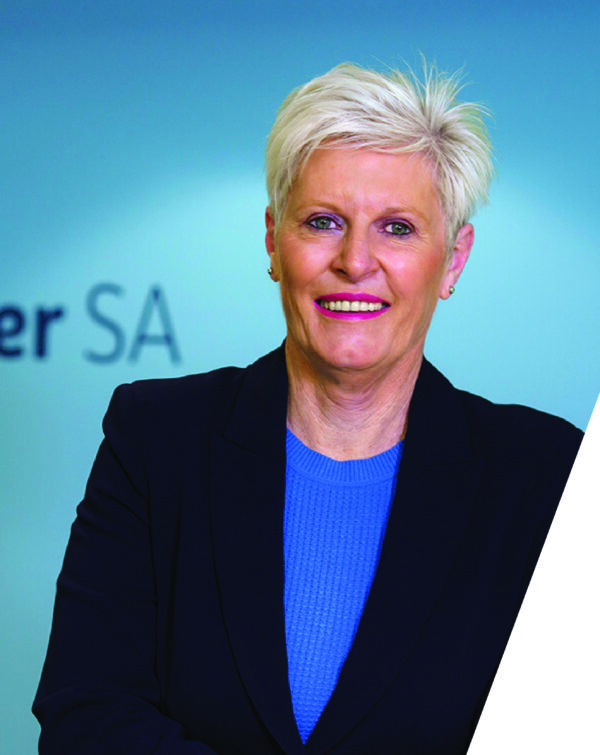
“We don’t want to leave any child in an at-risk situation”, Chief Executive, Department for Child Protection, Cathy Taylor FIPAA, emphasised this as being at the heart of her department’s response to COVID-19.

Ms Taylor also shared her insights on the challenges and opportunities her department is experiencing, and how they can continue to deliver services whilst keeping people safe.

Ms Taylor explored the below questions during this interview with Mark Thomson, Partner, PwC, throughout praising the overwhelmingly positive response from the community, NGO’s and her department.

  • The need for child protection doesn’t stop because of the coronavirus. What are you seeing in the world of child protection at the moment?
  • Given what you are seeing how has this event impacted your department?
  • At a very local level what have been your key focus areas, challenges and key initiatives of your department during this time?
  • What are you seeing on the ground and at the government level around this conversation?
  • Has data been elevated in importance for you through this event and do you think there are learnings for society about data? Has such a need arisen the space of Child Protection?
  • Crises can often kindle people’s innovation, strength, spirit and resilience. Which we are seeing on a daily basis as small businesses in particular innovate. What positive outcomes have you seen come out of the coronavirus?
  • What advice would you give to those leading teams at the moment?
  • Are there any leadership frameworks, models and mantras that you find particularly helpful during these times?
  • Given that there’s most likely some increased costs for carers in terms of access to Internet, technology devices and the like. Is there a plan to address this issue moving forward?
  • Those who are in processes such as foster care applications or any other involvement in the sector, should they expect any difference in sort of the timeframes that those processes typically run?

Resources

Can We Declare a COVID Dividend, by Martin Stewart Weeks – as mentioned

COVID-19 one-off cash boost for our foster and kinship carers – Media release from Rachel Sanderson MP – as mentioned

Disclaimer: This video contains an unedited transcript

If you have had a chance to view this interview, please provide your thoughts here.

Connect with us now on Facebook, LinkedIn and Twitter to be the first to hear about new interviews and resources.


  • Home
  • Resources
  • Emerging Leader

“We don’t want to leave any child in an at-risk situation”, Chief Executive, Department for Child Protection, Cathy Taylor FIPAA, emphasised this as being at the heart of her department’s response to COVID-19.

Ms Taylor also shared her insights on the challenges and opportunities her department is experiencing, and how they can continue to deliver services whilst keeping people safe.

Ms Taylor explored the below questions during this interview with Mark Thomson, Partner, PwC, throughout praising the overwhelmingly positive response from the community, NGO’s and her department.

  • The need for child protection doesn’t stop because of the coronavirus. What are you seeing in the world of child protection at the moment?
  • Given what you are seeing how has this event impacted your department?
  • At a very local level what have been your key focus areas, challenges and key initiatives of your department during this time?
  • What are you seeing on the ground and at the government level around this conversation?
  • Has data been elevated in importance for you through this event and do you think there are learnings for society about data? Has such a need arisen the space of Child Protection?
  • Crises can often kindle people’s innovation, strength, spirit and resilience. Which we are seeing on a daily basis as small businesses in particular innovate. What positive outcomes have you seen come out of the coronavirus?
  • What advice would you give to those leading teams at the moment?
  • Are there any leadership frameworks, models and mantras that you find particularly helpful during these times?
  • Given that there’s most likely some increased costs for carers in terms of access to Internet, technology devices and the like. Is there a plan to address this issue moving forward?
  • Those who are in processes such as foster care applications or any other involvement in the sector, should they expect any difference in sort of the timeframes that those processes typically run?

Resources

Can We Declare a COVID Dividend, by Martin Stewart Weeks – as mentioned

COVID-19 one-off cash boost for our foster and kinship carers – Media release from Rachel Sanderson MP – as mentioned


Disclaimer: This video contains an unedited transcript

If you have had a chance to view this interview, please provide your thoughts here.

Connect with us now on Facebook, LinkedIn and Twitter to be the first to hear about new interviews and resources.

  • Home
  • Resources
  • Emerging Leader

The work of a team of researchers from Edith Cowan University on innovative work behaviour in the public sector has been published in the March 2020 Issue of the Australian Journal of Public Administration.

Successive Australian governments have placed a high importance on innovation since the mid-2000s. However, the majority of research on organisational innovation is from the United States and Europe (see, for instance, the work of Anderson, Potočnik and Zhou, 2014). This new research by Dr Yuliani Suseno, Professor Craig Standing, Associate Professor Denise Gengatharen and Dr Diep Nguyen from the School of Business and Law at Edith Cowan University, helps correct this imbalance through the study of a large Australian public sector organisation.

WHAT IS INNOVATIVE WORK BEHAVIOUR?

Innovation work behaviour has been defined as the ‘behaviour directed towards the initiation and application… of new and useful ideas, processes, products or procedures’ (see De Jong and Den Hartog, 2007).

It has further been described by Scott and Bruce (1994) as a three-stage process:

  1. an individual employee comes up with creative ideas and solutions after a problem or issue has been identified
  2. the employee mobilises support for their innovative ideas and elicits other employees’ enthusiasm about the ideas and solutions
  3. the idea is transformed into a model, a prototype, or a useful application for the individual’s work role, group or the organisation.

READ THE FULL ARTICLE AND ACCESS THE RESEARCH PAPERS THROUGH THE IPAA NATIONAL WEBSITE

  • Home
  • Emerging Leader

The work of a team of researchers from Edith Cowan University on innovative work behaviour in the public sector has been published in the March 2020 Issue of the Australian Journal of Public Administration.

Successive Australian governments have placed a high importance on innovation since the mid-2000s. However, the majority of research on organisational innovation is from the United States and Europe (see, for instance, the work of Anderson, Potočnik and Zhou, 2014). This new research by Dr Yuliani Suseno, Professor Craig Standing, Associate Professor Denise Gengatharen and Dr Diep Nguyen from the School of Business and Law at Edith Cowan University, helps correct this imbalance through the study of a large Australian public sector organisation.

WHAT IS INNOVATIVE WORK BEHAVIOUR?

Innovation work behaviour has been defined as the ‘behaviour directed towards the initiation and application… of new and useful ideas, processes, products or procedures’ (see De Jong and Den Hartog, 2007).

It has further been described by Scott and Bruce (1994) as a three-stage process:

  1. an individual employee comes up with creative ideas and solutions after a problem or issue has been identified
  2. the employee mobilises support for their innovative ideas and elicits other employees’ enthusiasm about the ideas and solutions
  3. the idea is transformed into a model, a prototype, or a useful application for the individual’s work role, group or the organisation.

READ THE FULL ARTICLE AND ACCESS THE RESEARCH PAPERS THROUGH THE IPAA NATIONAL WEBSITE

  • Home
  • Resources
  • Emerging Leader

A normal reaction to a really abnormal situation…

As the COVID-19 pandemic unfolds, including 24/7 news reports, travel restrictions, working from home, pending social isolation logistics and concerns for your own and your loved ones’ health, it is totally normal to experience a wide range of thoughts, feelings and reactions.  Everyone reacts differently to times of stress and it’s important to recognise some of the signs and occurrences that you, your family or team members may experience during this time, as well as how to cope with them.

Human Psychology have provided us with 10 helpful strategies to combat stress and anxiety.

You can read and download the tip sheet here.

  • Home
  • Emerging Leader

A normal reaction to a really abnormal situation…

As the COVID-19 pandemic unfolds, including 24/7 news reports, travel restrictions, working from home, pending social isolation logistics and concerns for your own and your loved ones’ health, it is totally normal to experience a wide range of thoughts, feelings and reactions.  Everyone reacts differently to times of stress and it’s important to recognise some of the signs and occurrences that you, your family or team members may experience during this time, as well as how to cope with them.

Human Psychology have provided us with 10 helpful strategies to combat stress and anxiety.

You can read and download the tip sheet here.

  • Home
  • Emerging Leader

Anxiety and psychological distress are on the rise as our workforce adapts to the COVID-19 pandemic. More so than ever now is a time for leaders to shine through to guide and support their teams through these challenging times. Some leaders more so than others are better equipped to manage their staff virtually, but as most organisations don’t educate leaders on this area, many will struggle to adapt and find their feet in this new world.

Leadership during a pandemic is new and untested, where we are learning on the fly what does and does not work to manage staff in the virtual world. Human Psyhcology have shared with us essential advice for managers and team leaders in helping their team adapt. This includes;

  • Basic needs and technology use
  • Communication
  • Change benchmarks and engagement strategies
  • Mental health
  • Silver linings
  • Support

You can read and download the full tip sheet here.

  • Home
  • Emerging Leader

We know how important it is to care for the mental health of your team and colleagues during challenging times, however we cannot understate the importance of caring for the mental wellbeing of family members. With social isolation, families, whether living in the same household, or split over distance undergo significant stress and challenges in adapting to the COVID-19 pandemic. Our friends at Human Psychology have shared with us some of the best advice for parents and families to cope with the new stresses of recent times.

Talking with Children About COVID-19

There is a common misconception that talking with children and young people about a topic such as COVID-19 may increase anxiety. However, research suggests it may have the opposite effect. For children not having information is scary and many children will fill in the blanks with their own imagination-often imagining something far worse than the truth. Older children may take to the internet and social media for their answers, which can sometimes become overwhelming or misleading.

Download the full Parent Tip Sheet here

Tips for Your and Your Family to Cope with Home Isolation

Times are very uncertain at the moment and many people are being asked to make lifestyle changes to help society work through COVID-19. For many of us, these changes include working from home and restricting the amount of time we spend socially interacting.

Social isolation can pose various challenges for our mental health. As social beings, we need social interaction and connectedness. Spending time isolated by ourselves limits the positive distractions available to us to dilute the amount of time we might stress over COVID-19.

Download the full Tip Sheet here, to find advice, ideas and inspiration for coping with Home Isolation

  • Home
  • Resources
  • Emerging Leader

Anxiety and psychological distress are on the rise as our workforce adapts to the COVID-19 pandemic. More so than ever now is a time for leaders to shine through to guide and support their teams through these challenging times. Some leaders more so than others are better equipped to manage their staff virtually, but as most organisations don’t educate leaders on this area, many will struggle to adapt and find their feet in this new world.

Leadership during a pandemic is new and untested, where we are learning on the fly what does and does not work to manage staff in the virtual world. Human Psyhcology have shared with us essential advice for managers and team leaders in helping their team adapt. This includes;

  • Basic needs and technology use
  • Communication
  • Change benchmarks and engagement strategies
  • Mental health
  • Silver linings
  • Support

You can read and download the full tip sheet here.

  • Home
  • Resources
  • Emerging Leader

We know how important it is to care for the mental health of your team and colleagues during challenging times, however we cannot understate the importance of caring for the mental wellbeing of family members. With social isolation, families, whether living in the same household, or split over distance undergo significant stress and challenges in adapting to the COVID-19 pandemic. Our friends at Human Psychology have shared with us some of the best advice for parents and families to cope with the new stresses of recent times.

Talking with Children About COVID-19

There is a common misconception that talking with children and young people about a topic such as COVID-19 may increase anxiety. However, research suggests it may have the opposite effect. For children not having information is scary and many children will fill in the blanks with their own imagination-often imagining something far worse than the truth. Older children may take to the internet and social media for their answers, which can sometimes become overwhelming or misleading.

Download the full Parent Tip Sheet here

Tips for Your and Your Family to Cope with Home Isolation

Times are very uncertain at the moment and many people are being asked to make lifestyle changes to help society work through COVID-19. For many of us, these changes include working from home and restricting the amount of time we spend socially interacting.

Social isolation can pose various challenges for our mental health. As social beings, we need social interaction and connectedness. Spending time isolated by ourselves limits the positive distractions available to us to dilute the amount of time we might stress over COVID-19.

Download the full Tip Sheet here, to find advice, ideas and inspiration for coping with Home Isolation

Top
IPAA South Australia

© Institute of Public
Administration Australia
South Australian Division 2026

  • Privacy
  • Disclaimer
  • Site map
  • IPAA SA Constitution
  • Contact
  • Networking

Connect with us

  • Facebook
  • Twitter
  • Youtube
  • Linkedin
  • Vimeo

© Institute of Public
Administration Australia
South Australian Division 2026

  • Privacy
  • Disclaimer
  • Site map
  • IPAA SA Constitution
  • Contact
  • Networking

Connect with us

  • Facebook
  • Twitter
  • Youtube
  • Linkedin
  • Vimeo
  • Subscribe to our newsletter

  • This field is for validation purposes and should be left unchanged.

Connect with us

  • Facebook
  • Twitter
  • Youtube
  • Linkedin
  • Vimeo

© Institute of Public
Administration Australia
South Australian Division 2026