
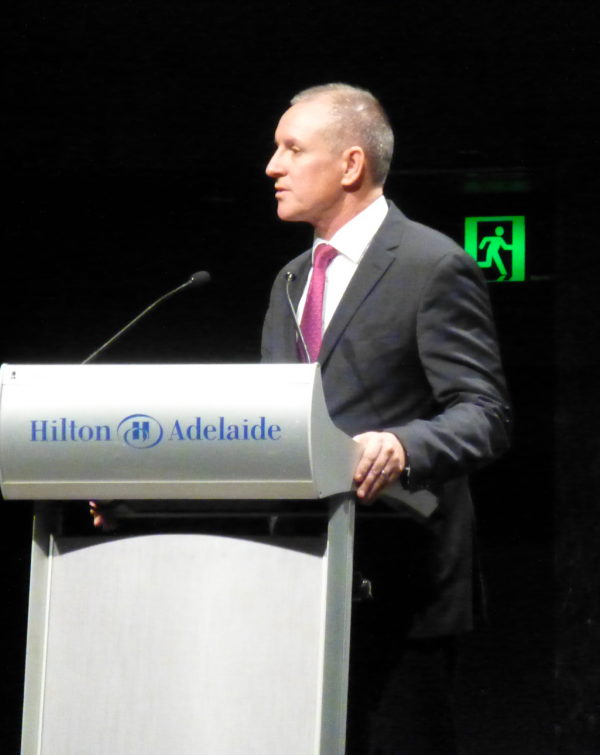
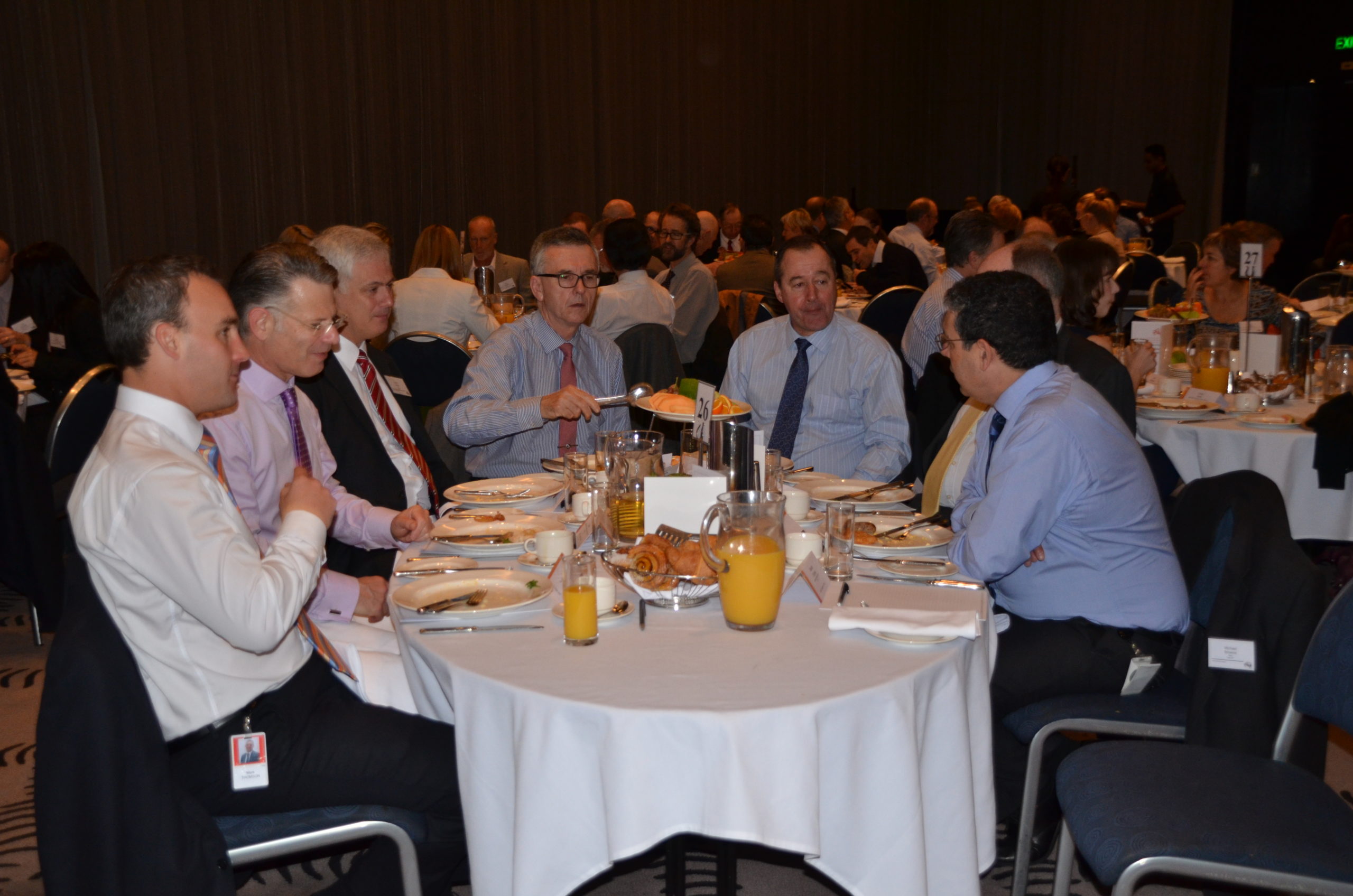
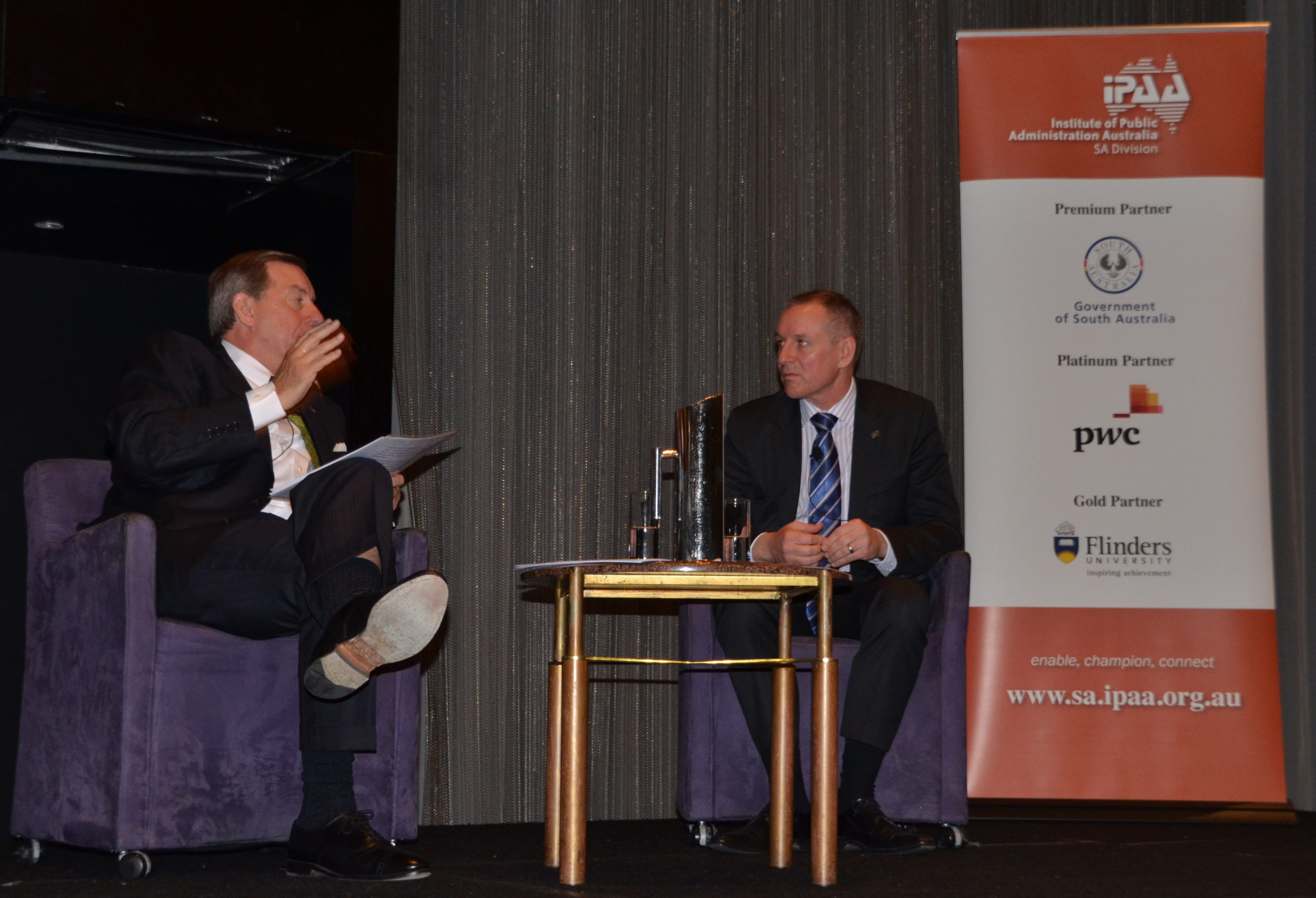
The Hon Jay Weatherill MP, Premier of South Australia addressed the public sector on the key themes of his government for the current term and beyond on the 27th May 2014 at the Grand Ballroom, Hilton Adelaide, 233 Victoria Square, Adelaide, SA.
The event was hosted by the Institute of Public Administration Australia South Australia (IPAA SA) and Erma Ranieri, Chief Executive, Office for Public Sector Renewal and Deputy Chief Executive, Department for Manufacturing, Innovation, Trade, Resources and Energy (DMITRE) was the MC for the morning.
On 2nd September 2013 The Hon Justice Bruce Lander QC officially commenced as South Australia’s inaugural Independent Commissioner Against Corruption (ICAC) following his resignation from the Federal Court of Australia. The role of the Commissioner is to identify and investigate corruption in public administration, and prevent or minimise corruption, misconduct and maladministration in public administration.
The Office for Public Integrity (OPI) is responsible to the Commissioner and is the central point of contact to receive and assess complaints and reports about corruption, misconduct and maladministration in public administration.
In collaboration with The Office for Public Integrity and Independent Commissioner Against Corruption Public Integrity Reform Project the Institute of Public Administration Australia (IPAA) are scheduling a presentation and panel event titled Public Integrity Reform – Independent Commissioner Against Corruption (ICAC) on the 19th September.
The event will be opened by the Hon John Rau, Deputy Premier and Attorney-General, with the key note speaker being the Commissioner and other presenters include the Deputy Commissioner of Police and the Ombudsman. There will be an interactive panel discussion consisting of the presenters and the Police Ombudsman and other public sector officials, during which the audience will also have the opportunity to direct questions to the panel. The event will explain the role of the Commissioner, the role of the OPI and how these will interact with other inquiry agencies i.e. the Ombudsman, Police Ombudsman, Commissioner for Public Sector Employment and SA’s law enforcement agency, SAPOL.
For further information on ICAC and to locate the recently released Directions and Guidelines for Inquiry Agencies, Public Authorities and Public Officers visit www.icac.sa.gov.au
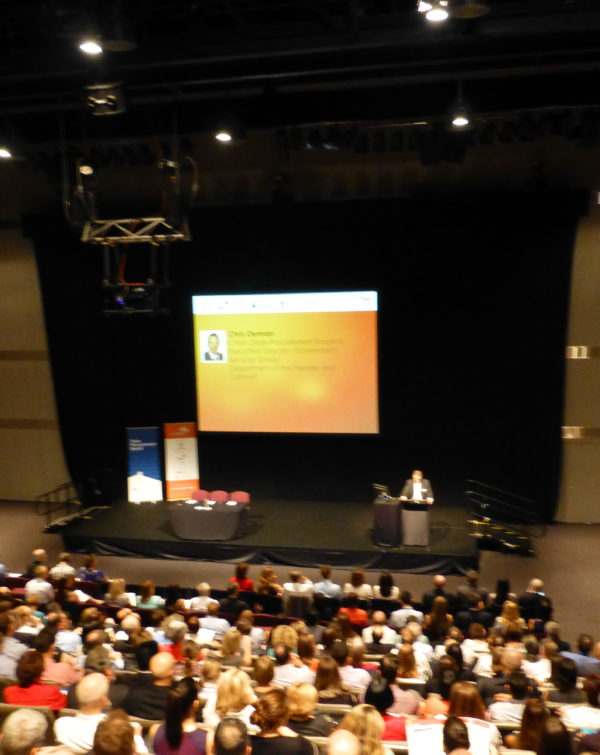
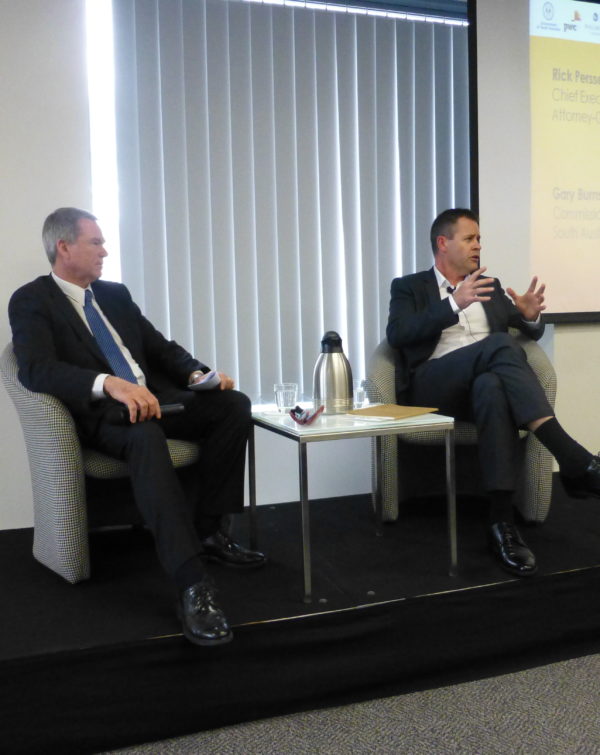

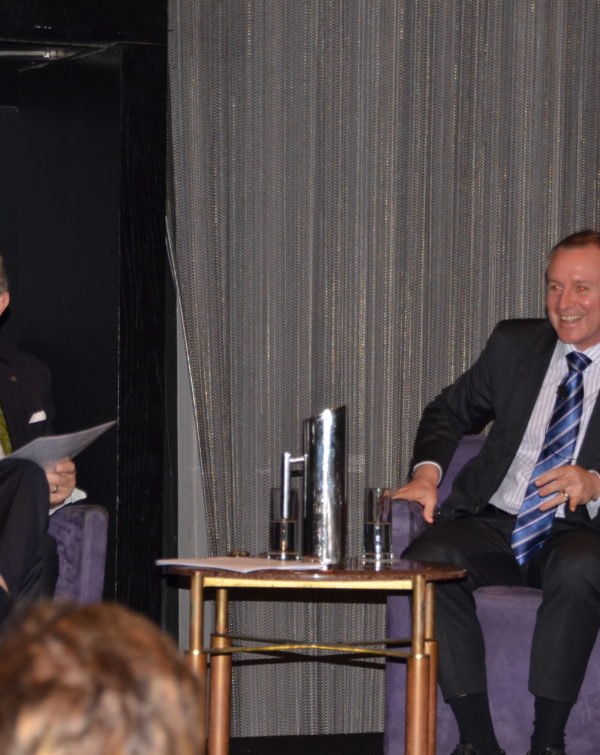
EOB 2013
EOB 2013
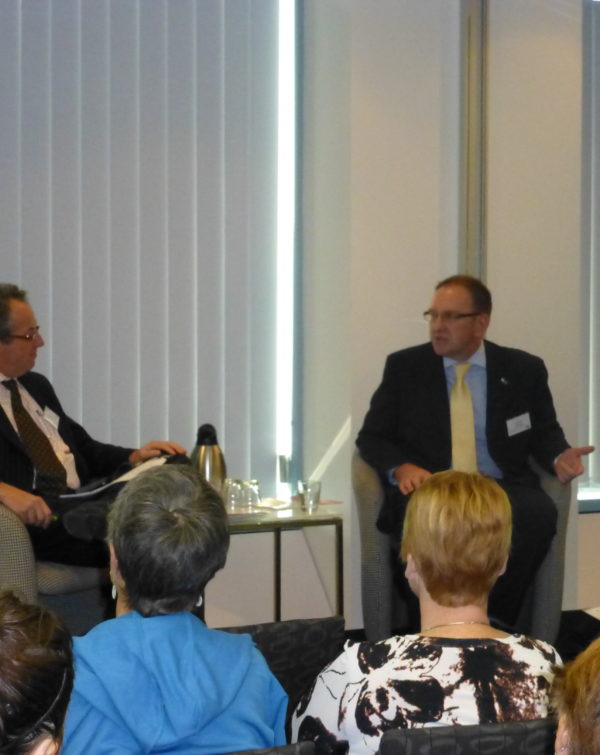
IPAA SA in collaboration with the Department of the Premier and Cabinet (DPC) brings you the third High Performance Framework (HPF) seminar – Leadership.
The previous seminars in 2012 focused on customer and citizen focused organisations, and innovation and continuous improvement. These successful seminars attracted over 1,000 public sector employees.
This seminar is the flagship of the series and will address the crucial HPF characteristic of Leadership; in particular ‘High performing organisations are well led’. The seminar presents a unique opportunity to hear from recognised leaders who will provide an insight to the factors in successful leadership.
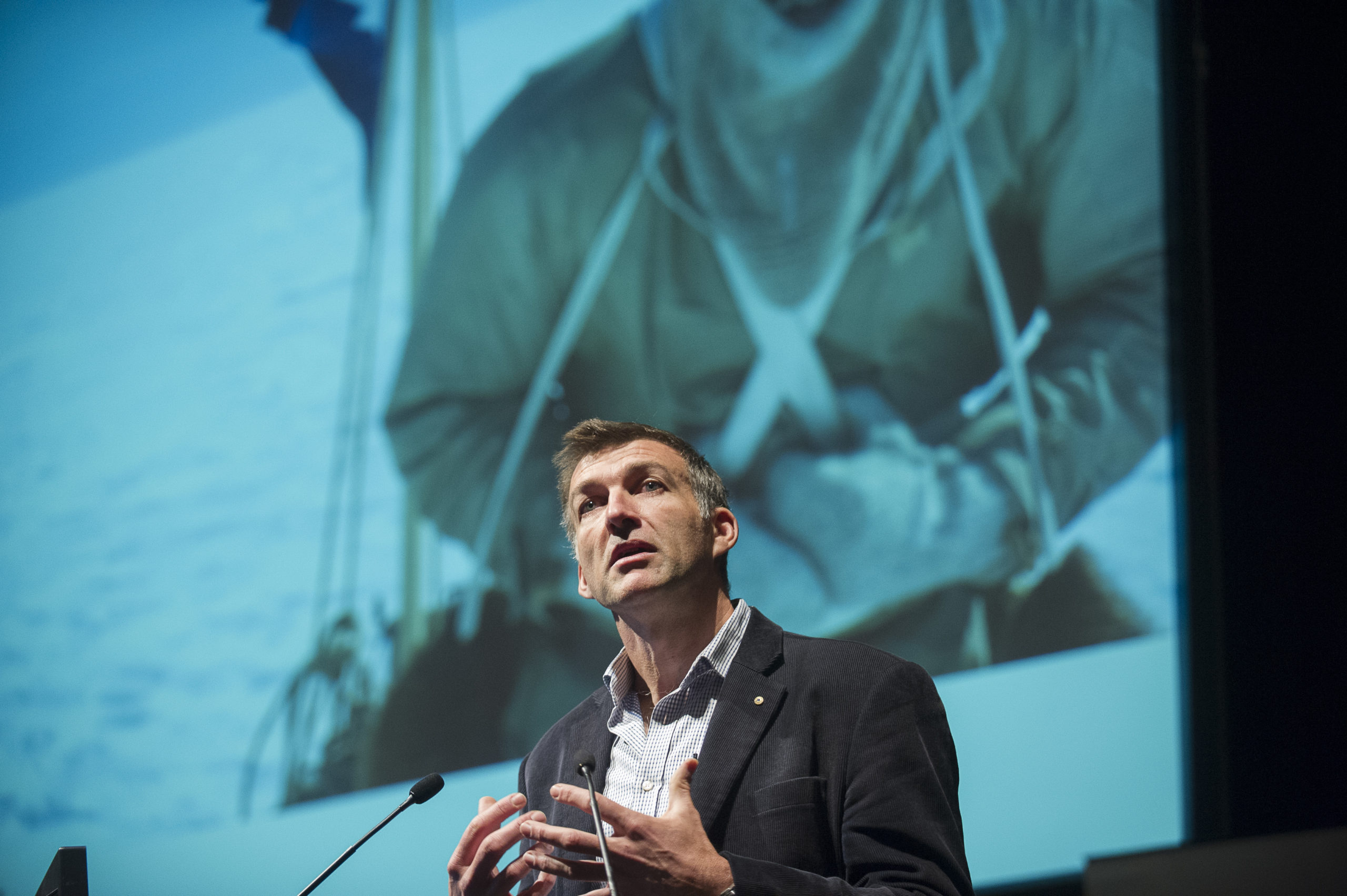
Key note speaker, Tim Jarvis AM, is one of the world’s leading explorers and possesses an extraordinary adventure and leadership resume’. He is a best-selling author, film-maker and has a fascinating leadership story to tell.
This event will:
The HPF Community of Practice is a space for all public sector employees who work in or have an interest in performance evaluation, innovation, leadership, or continuous improvement. The community maintains an online presence using SAGE, the SA Government’s collaboration platform, at www.sage.sa.gov.au/display/HPF. Please note that this space is only accessible through the SA Government’s network (StateNet).
For more information about the SA Government’s High Performance Framework, please click on the following link: http://www.hpf.sa.gov.au

Did You Know? Under the Work Health and Safety Act 2012 (SA) (WHS Act) an ‘Officer’ includes a person who makes or participates in making decisions that affect the whole or a substantial part of a public authority. This will most commonly include the position of Chief Executive Officer but may also include Executives and Managers from the SAES and Feeder Group. Whether you would be considered an ‘Officer’ as deemed under the WHS Act depends on a number of factors such as seniority, delegations, financial sign-off and reporting structures.
Why is this important for your department? The new WHS Act imposes greater responsibilities and legal requirements on you as an Executive, particularly if you are an ‘Officer’. This is because the WHS act requires ‘Officers’ to exercise ‘due diligence’ to ensure that the health and safety duties of the person conducting a business or undertaking (PCBU) are being met.
Why is this important for you? ‘Officers’ can be held personally responsible for contraventions of WHS laws. An ‘Officer’ has a duty to exercise due diligence to ensure a PCBU meets its health and safety obligations. This duty cannot be delegated and failure to comply is a criminal offence, which can carry severe penalties.
The Institute of Public Administration Australia (IPAA SA), with the support of SafeWork SA, have designed a forum exclusively for Public Sector Executives who are likely to be considered an ‘Officer’ under the WHS Act.
The forum will provide a concise overview of the new WHS legislation and will include a discussion of the general safety principles (many of which are not new) along with a discussion of key changes. We will discuss how you can determine whether you are an ‘Officer’ for the purposes of the WHS Act and, if you are, what you can do to ensure you meet your obligations.
Topics to be covered include:
You may have already attended a WHS workshop, however, this forum is different as it will have a strong practical focus specifically on the elements that matter to Public Sector Executives. It will focus on your obligations as an individual and how you can meet those obligations with non-onerous guidelines.
This forum will be facilitated by Michael Kay, a specialist Employment/WHS Lawyer plus you will have the opportunity to direct your questions in a Q&A panel session involving:
