







Neuroleadership draws its name from the idea of applying neuroscience principles to the field of leadership. Neuroscience is a multidisciplinary field that links psychology and neurochemistry to understand the intrinsic links between biological processes occurring in the nervous system to behavior and cognitive function.
As a leader, you will have long puzzled with questions of “Why does my team act the way they do?”, “What is preventing me from being able to get my team on board with X, Y or Z?” or “What can be causing dysfunction in my team?” Neuroleadership sheds light on these kinds of questions, to explain behaviour and, in turn, suggest principles that will help us understand and positively modify the behaviour of ourselves and others.
Neuroleadership in particular lends itself to 4 areas of leadership which include: decision–making and problem–solving, emotional intelligence and regulation, collaboration and communication and leading others through change.
One of the core principles of neuroleadership is linked to the primitive structures of our brain chemistry for pleasure, reward and avoiding threats. This idea highlights that we all innately act in ways that minimise threat and maximise reward.
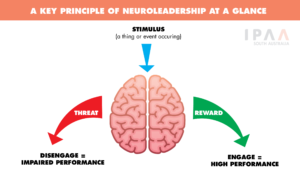
So, why does understanding these neuroleadership principles make you a better leader? In short, neuroleadership comes into its own at the organisational and team level – where our approach to management becomes more in-tune with the ‘human needs of staff’ to optimise engagement, performance, satisfaction and productivity. The core concept mentioned above flags an essential point of humanisiation for leaders and organisations – in the approach taken to change the way we perceive a stimulus in the environment. This means taking the stimulus which is producing a ‘threat’ response, and prompting us to disengage, and turning it into a ‘reward’ response, which engages us to perform at our best.
To get yourself and your team performing at their best, it’s vital to create an environment that puts your brain into the ‘reward state’ – where we are at our prime to make decisions and judgments, be innovative and be proactive with change. A ‘rewarding’ environment is one that recognises the ‘threats’ present in its culture and workplace. Workplaces that are constantly shifting goals and expectations, have poor communication or where people fear punishment for mistakes, creates a ‘threat state’ in our minds that cause us to disengage – with this presenting as impaired decision–making, poor mental recall and mental capability – to the extent that even routine tasks are impaired.
You can use neuroleadership tools to help shape your team and workplace into a rewarding environment by understanding and managing the neural processes that are leading to behaviours. This is where some expert advice will be essential – most leaders seek coaching and training on the area of neuroleadership to deepen this understanding and gain practical tools that can be deployed in the workplace.
If you want to start implementing neuroleadership principles to improve your own and your team’s performance, we hope to see you at our upcoming ‘Neuroleadership’ intensive half day course. During this course, you will work with an experienced psychologist and walk away with ways you can get the best from your team.
Register Now for ‘Neuroleadership’.
References
IPAA SA Neuroleadership Course Book, 2021.
Do you work to influence public policy in ways that lead to better outcomes for the community?
Have you ever worked with researchers or academics to support the use of evidence and research in the policy making process?
If you answered yes to these two questions, then we want to hear about your experiences and invite you to complete the survey by clicking on the link below.
https://research.unisa.edu.au/redcap/surveys/?s=39FEJ8DRTY
The survey will help the team from ‘Health Translation SA, SAHMRI’ learn about the attitudes towards and experiences with collaboration within and across the academic and policy-making communities.
We seek your expertise, experiences, and practice wisdom to understand the challenges and opportunities when working with researchers and /or policy actors for the purpose of policy development, implementation, and evaluation.
Findings from the survey will help to inform the development of strategies that foster and support collaborative relationships between the academic community and policy actors, and ultimately lead to better policy outcomes for the community.
The survey is confidential and will take about 10-15 minutes to complete.
Please feel free to forward the survey link to colleagues working in similar roles.
|
||||||||||||||||||||||||
|
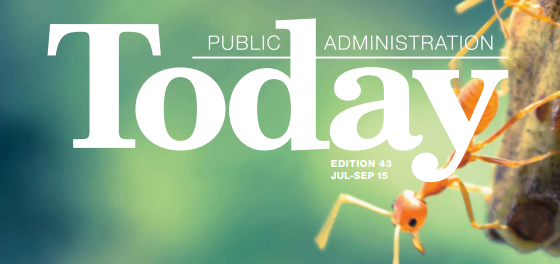
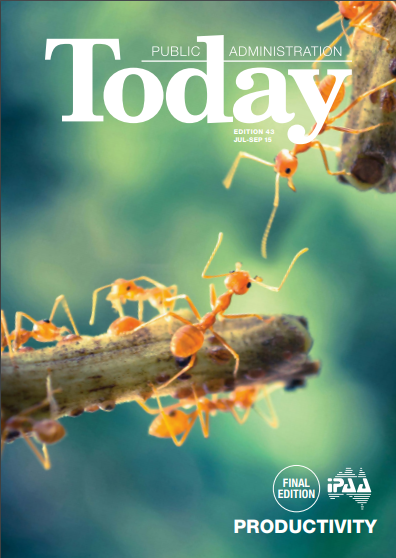
Public Administration Today (Today) was a quarterly publication for IPAA members, which served as a national communications medium for all IPAA members. It aimed to report IPAA activities, promote and celebrate achievements in Australian public sector management, disseminate information about major trends and developments, and facilitate discussion and debate.
The magazine was published by IPAA ACT on behalf of IPAA National, with a circulation of approximately 5,000 as at 2015.
In June 2015 it was determined that IPAA would cease the publication of Public Administration Today. As a result of falling circulation nationally and increasing costs, it was no longer a financially viable proposition. Edition 43 was the final, covering the period July to September 2015. IPAA ACT wishes to thank the many contributors to the magazine, with a special mention for Mr Ron Dent, the editor for the four final years of the publication.
The four most recent editions are accessible below, with previous editions available by contacting IPAA ACT on 02 6154 9800.
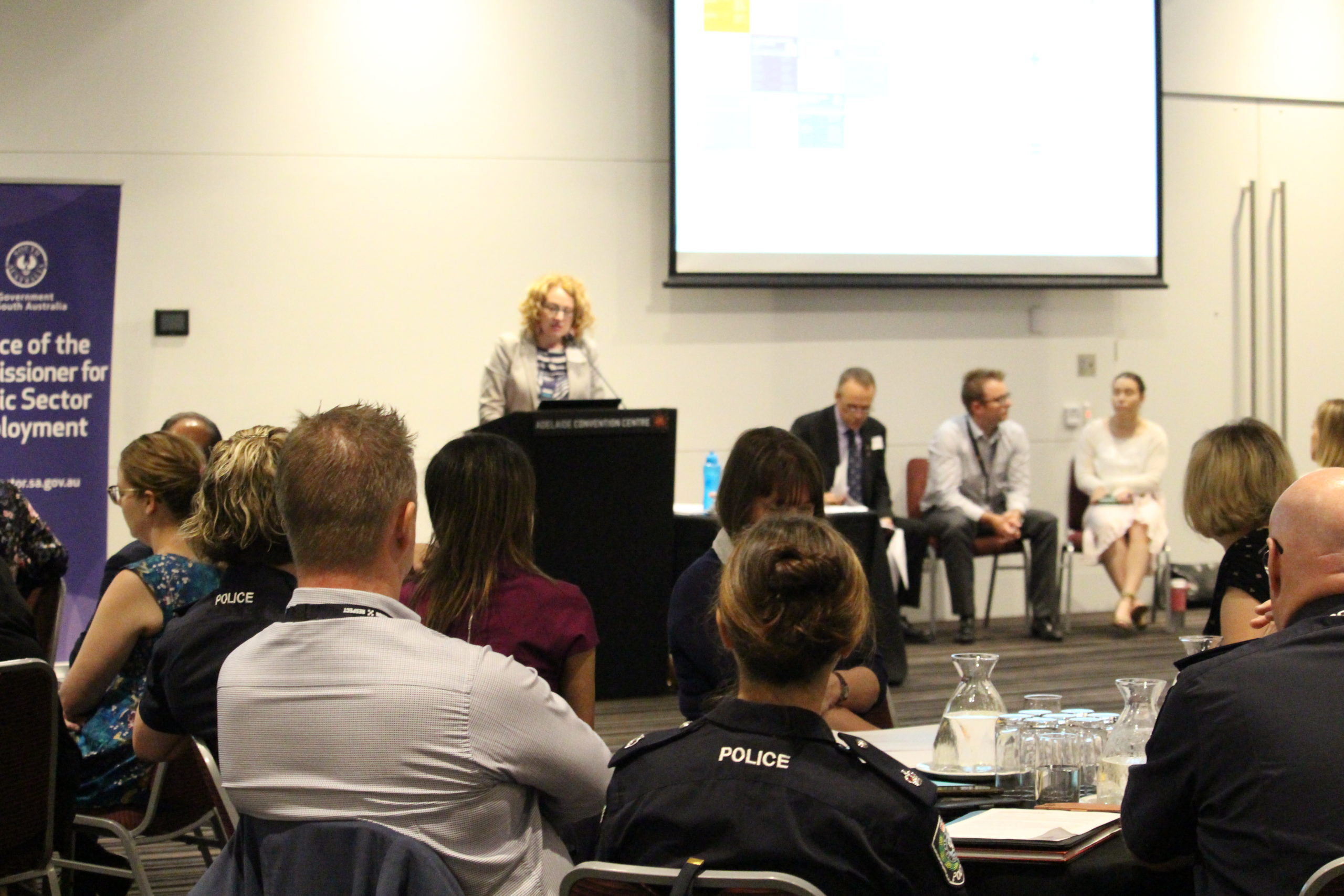
A Core People Practices and Supplier Expo that linked a panel of Group training Organisations (GTOs) with agency representatives was held recently. The Expo, which supported the Skilling SA Public Sector Project was an initiative of the Commissioner for Public Sector Employment and was assisted by IPAA SA. The expo linked SA Government Providers for Human Resources (HR) Systems and Group Training Organisations (GTO’s) with agency representatives to facilitate improved HR System capabilities and support the Public Sector Project.
Under the Skilling SA Public Sector Project, GTO’s are now available to assist State Government agencies in the recruitment of apprentices and trainees and partner with Agencies who will host trainees and apprentices.
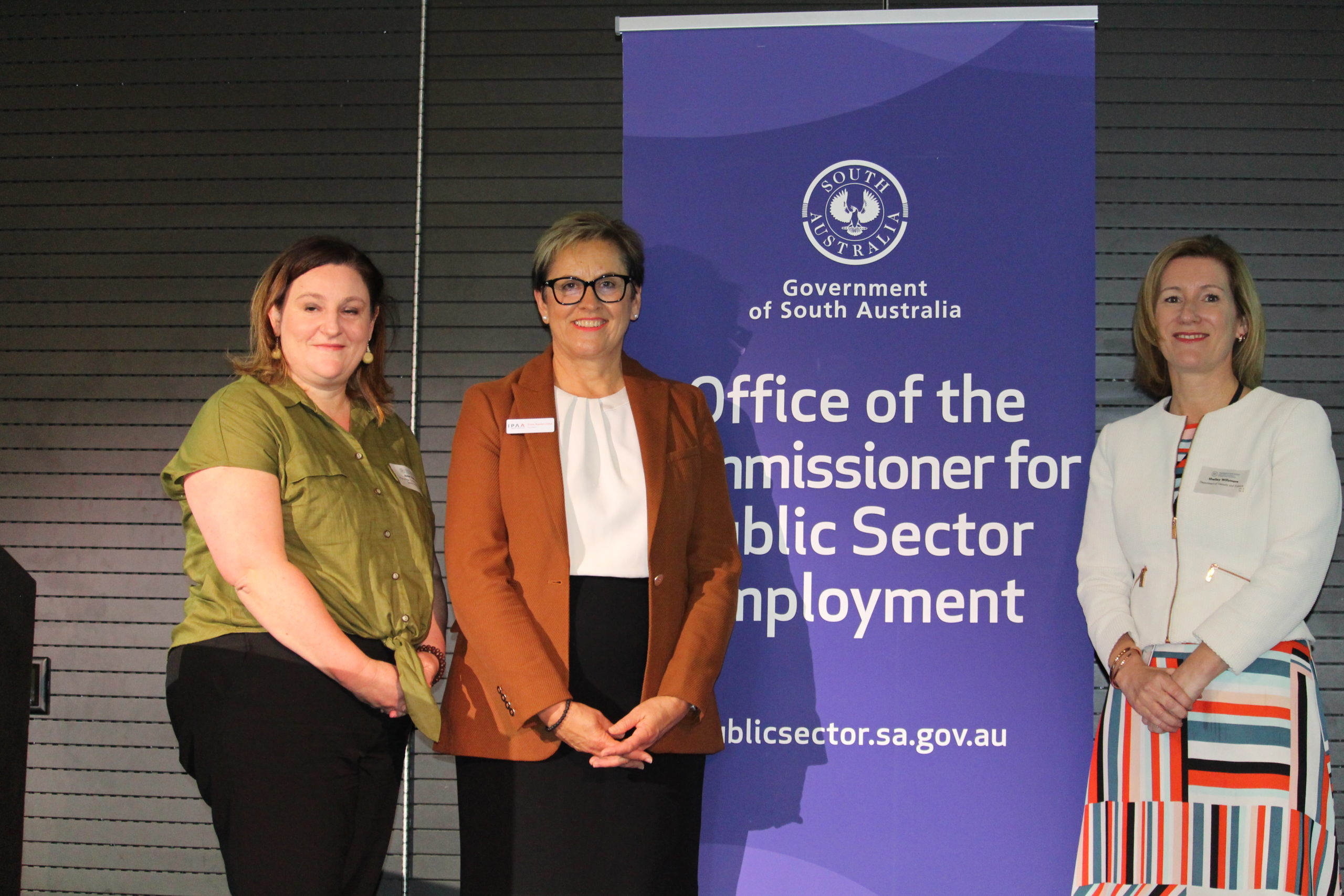
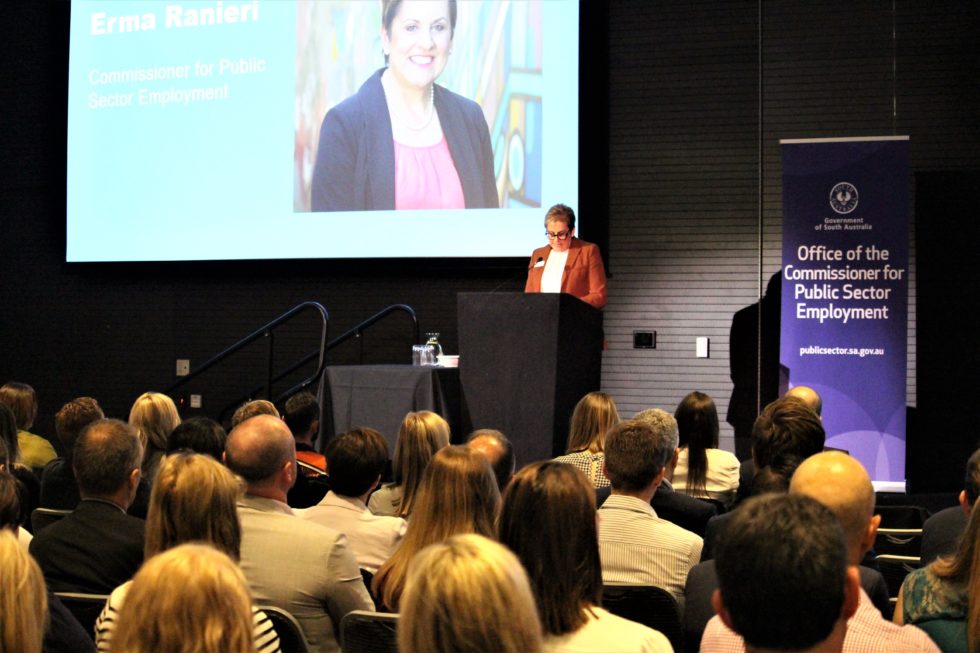
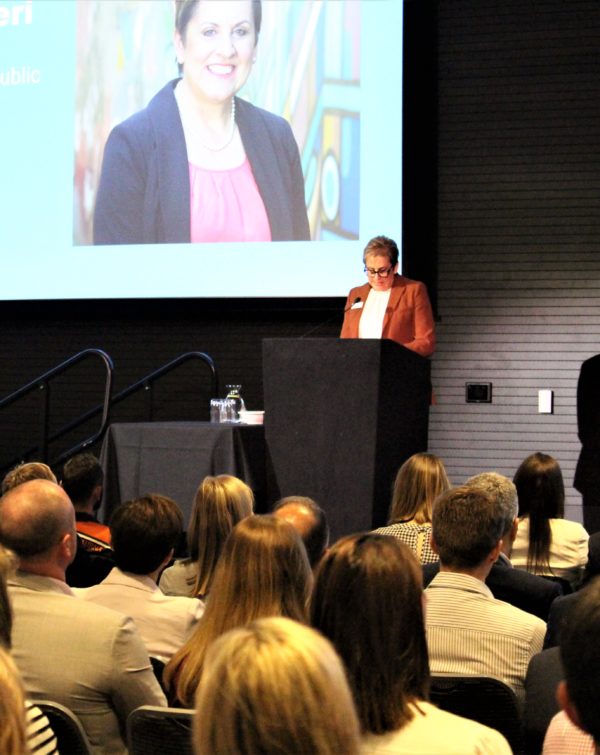
To commence the day’s proceedings Jack Buckskin gave a moving ‘Welcome to Country’, with Commissioner Erma Ranieri, sharing her enthusiasm for this unique opportunity for collaboration and opening the expo to representatives and suppliers.
Shelley Willsmore, Chief Human Resource Officer at OCPSE also addressed the audience and highlighted the importance of a shared vision for future recruitment and talent management for the public sector. As part of her speech Ms Willsmore explained the importance of planning to cater for the changing and evolving nature of the workforce.
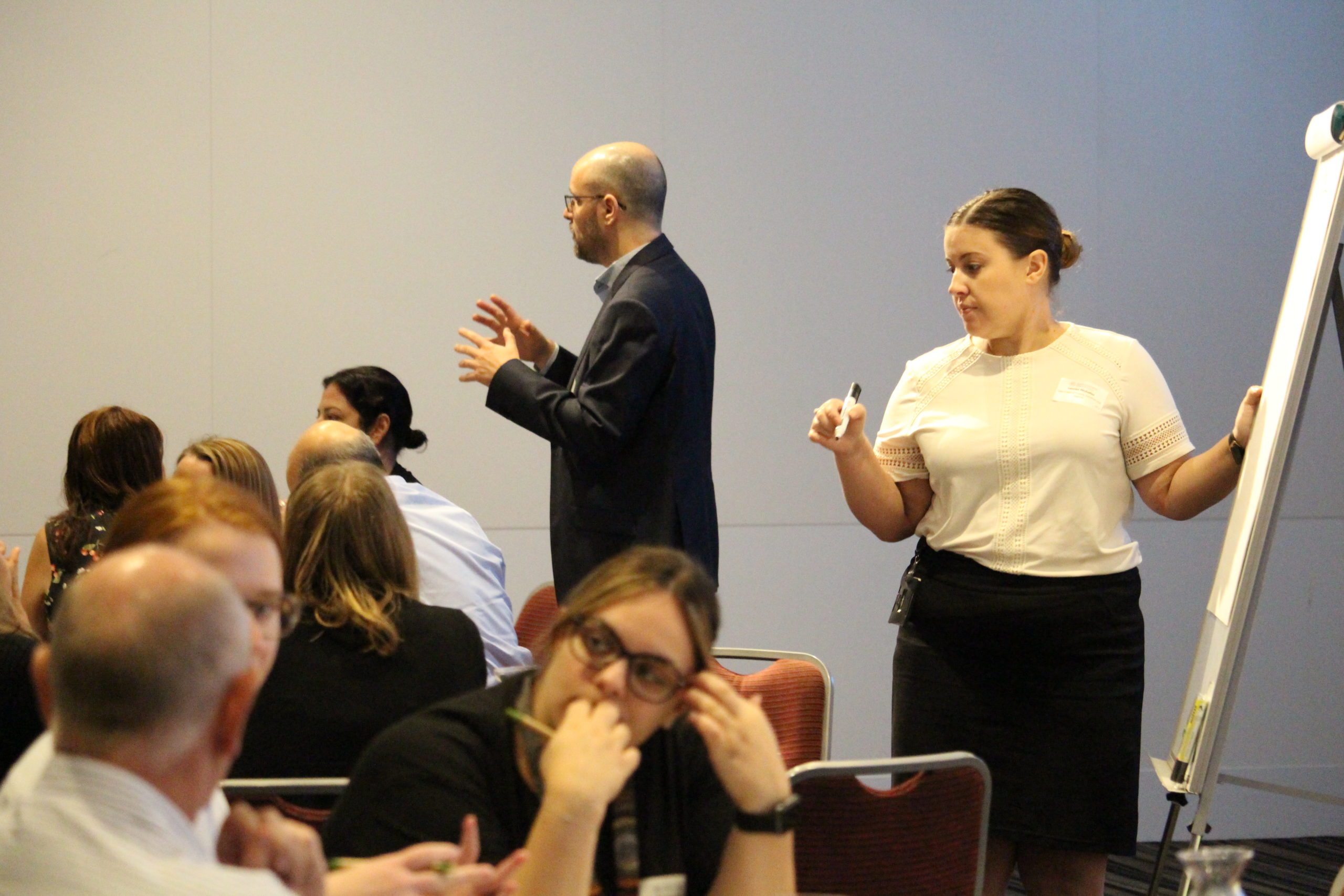
As part of the Expo, representatives were engaged in two workshops gathering ideas and input across agencies and additionally having the opportunity to engage with suppliers exhibiting on the day.
These workshops were facilitated by Public Sector Innovation Lab as part of addressing key issues identified through the ‘2018 I WORK FOR SA YOUR VOICE SURVEY’ and the resulting ‘South Australian Public Sector Action Plan 2019-20’.
The first workshop was led by Dan Butler from the Public Sector Innovation Lab, and here representatives explored how innovation and creativity can be applied to determine a best practice framework for recruitment at all levels across the sector. In this interactive workshop, each group was encouraged to put forward ideas and needs from their own agency and how to identify the barriers to achieving best practice.
The second workshop focused on leadership capability and talent management and was led by Jessica Lynch and Aaron Shepherd from OCPSE. Here representatives examined current views on leadership development, and discussed the future of good talent management, identification and development for employees at all levels across the public sector.
In the coming weeks the outcomes and feedback will assist in furthering the South Australian Public Sector Action Plan.
Public Administration Today (2004–2015) was a quarterly publication for IPAA members and built on the earlier success of the Canberra Bulletin of Public Administration (1973–2004).
‘Today’ reported on IPAA activities, promoted and celebrated achievements in Australian public sector management, shared information on major trends and developments, and generated discussion and debate.
Contact IPAA ACT on 02 6154 9800 if you would like to access to earlier editions of Public Administration Today or otherwise visit us at level 6, 12 Pirie St, Adelaide SA, 5000 to browse through our available editions.