The Hon Greg Hunt MP, Minister for Health and Minister Assisting the Prime Minister for the Public Service and Cabinet, will deliver the 2020 Garran Oration.
The oration will be streamed on 21 October 2020, from 12.30 pm to 1.30 pm (AEDT).
The event will be chaired by IPAA’s National President, Dr Gordon de Brouwer PSM.
The Garran Oration honours the memory of the first, and one of the most prominent Australian Commonwealth public servants, Sir Robert Garran GCMG. It has been held every year since 1959.
Sir Robert was one of the country’s most senior public servants during the Spanish influenza epidemic of 1919, serving as Secretary of the Attorney-General’s Department.
Over the course of 1919 up to 40 per cent of Australians population had been infected by the Spanish flu and an estimated 15,000 Australians lost their lives, with some Aboriginal communities recording a mortality rate of 50 per cent.
Reflecting on the role of public administration in responding to the challenges brought by pandemics, Dr de Brouwer said:
“In a year when Australia’s society and economy have been so heavily hit by the COVID-19 pandemic, it is a real privilege to host the Health Minister the Hon Greg Hunt as the 2020 Garran Orator.
It is a year where the role of public services in supporting the work of governments across Australia has never been clearer.”
Following his delivery of the Garran Oration, Minister Hunt will join Dr de Brouwer in conversation, reflecting on the response and achievements of governments and public services in managing the twin social and economic crises brought on by the COVID-19 pandemic.
Some questions from IPAA Divisions across Australia will also be put to the Minister.
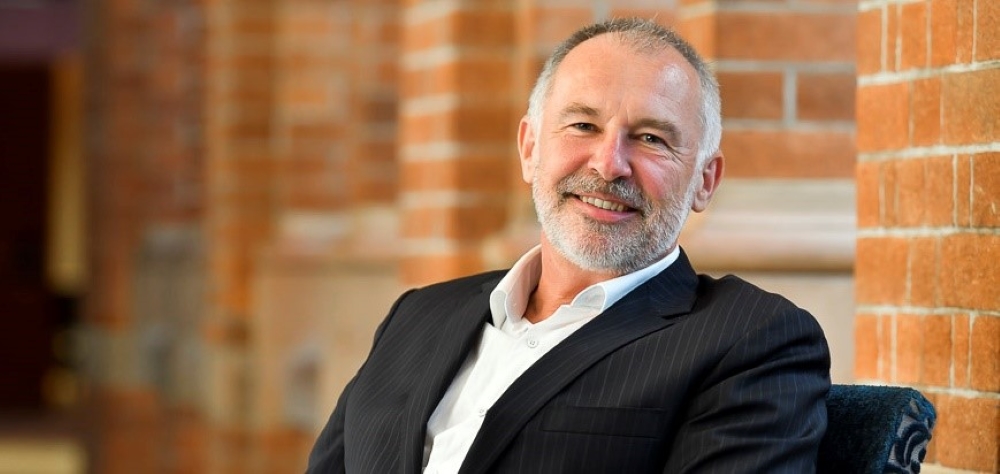
Dr Gordon de Brouwer PSM, IPAA’s National President, will chair the 2020 Garran Oration and join Minister Hunt in conversation.
Immediately following a Vote of Thanks by Cath Ingram to the Minister, Dr de Brouwer will announce the 2020 National Fellows of the Institute of Public Administration Australia.
The award of National Fellow is given to those individuals who have made an outstanding contribution to public service and to IPAA. National Fellows have been awarded each year since 1983.
Further information on the Garran Oration and the National Fellows Award is available on IPAA’s national website.
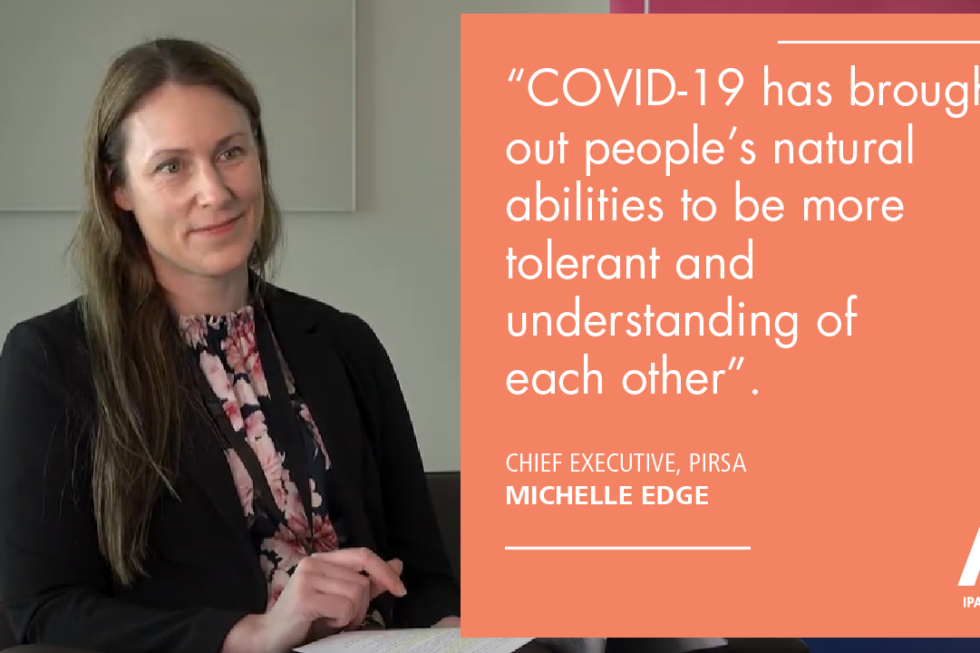
Chief Executive, Primary Industries and Region (PIRSA), Michelle Edge arrived in her new role ‘right in thick of it’ as the COVID-19 pandemic response unfolded. This presented both a number of challenges and opportunities for her department, as Ms Edge hit the ground running to provide leadership and direction during this challenging time.

With a strong background in crisis management from her time and experience in New Zealand, dealing with an outbreak of tuberculosis and an earthquake disaster response, Ms Edge came to SA with a unique perspective and set of capabilities to respond to the challenges her department faced.
Perhaps one of the biggest challenges during this crisis period for Ms Edge and her department was monitoring and responding to how crisis and disaster situations affected their stakeholders. With the recent bushfires and then the subsequent pandemic, the health and wellbeing of the community was at the forefront of planning their response. The importance of business continuity, preparedness and identifying what needed to change and what needed to continue or adapt, was in key consideration during this time, and as we move forward to the recovery phase.
As a leader, Ms Edge faced many challenges, especially coming directly into a new role and team from interstate. Ms Edge highlighted the importance of communication with both her own people and across the industry during a time of uncertainty.
“Letting people know that what they were feeling, others were feeling”
Ms Edge highlights that COVID has brought new opportunities to build more empathetic and positive workplace cultures, which is a change she hopes to see persist in the new normal.
“COVID has brought out people’s natural abilities to be more tolerant and understanding of each other”.
As we move forward, Ms Edge shared that building the skills and capabilities of her department to remain resilient and to care for mental wellbeing will be a strong focus.
Above all, Ms Edge praised her department and teams for their ability to react adaptively to this crisis. The preparedness of her team to meet the challenges of different scenarios, such as bushfires, disease outbreaks and pandemics was vital in both the initial response to the pandemic and bushfires of 2020, and has reinforced “the value of preparedness exercises”. In the coming bush fire season, Ms Edge has put renewed focus on using the lessons, of what has ultimately been a very challenging year, to increase our bushfire preparedness and apply new learning from experience and the outcomes of the royal commission.
Agriculture and farming have keenly felt the impact of COVID-19. Ms Edge and her department are calling for everyone to show their support towards our farmers, who are busy putting food on our tables, and join in the #ThankSAFarmers movement. To take part all you need to do is share your thankyou message to our farmers on Instagram, Facebook, Twitter or LinkedIn with #ThankSAFarmers.

Joining us virtually On the Couch Chief Executive, Environment Protection Authority (EPA), Tony Circelli, shared how this unique crisis situation called on his department to embrace different ways of providing service.
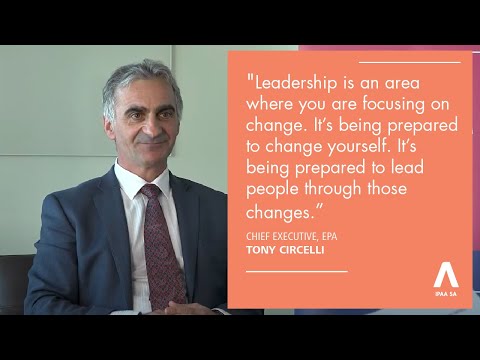
“The key thing is communication”
As highlighted by many public sector leaders in these sessions, Mr Circelli emphasised how vital communication is, both internally and externally, particularly during the early response to the pandemic. In these challenging circumstances, stakeholders and staff needed to know if services were continuing and what this would look like.
The health and wellbeing of both the EPA’s teams and customers are a big part of the culture at the EPA, Mr Circelli shared. From the initial stages of the pandemic, this mindset helped them recognise that everyone was going to respond differently to the changes brought about by working from home, distancing restrictions and impacts on businesses’ operations. From his department, there was a large effort to provide support to staff who needed it, especially younger employees or those entering the sector, who had not yet had the chance to form connections.
“The big cultural change to society, is that everyone has had to learn the technology”
As we now emerge into the recovery period, a key focus for Mr Circelli will be examining how we can embed the ‘new business as usual’ into what services will look like post-COVID, and how the delivery of those services may be changed for the better.
When asked what Mr Circelli and his department might do differently post COVID-19, he noted his enthusiasm for taking up new and existing technologies to save time and increase their ability to communicate. The new possibilities of working from home have changed the way recruitment and HR may work, where people in rural areas can access increased opportunities.
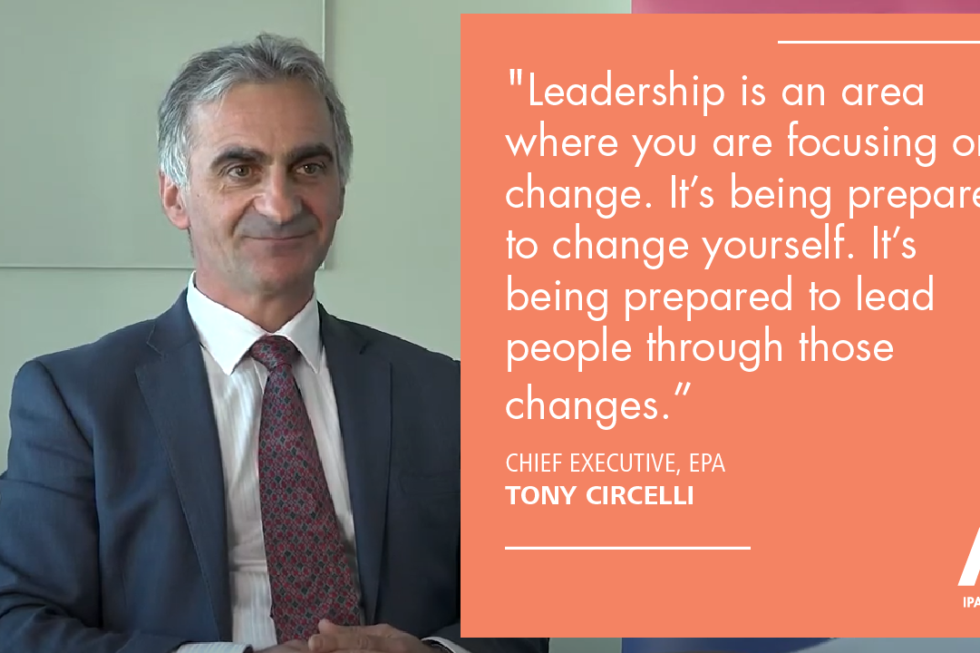
“Leadership is an area where you are focusing on change. It’s being prepared to change yourself. It’s being prepared to lead people through those changes”
Mr Circelli also shared his thoughts on important traits for leaders during this time of change. With all the new opportunities to shift the way things have been traditionally done, we can learn from Mr Circelli that now is the time to be exploring those new opportunities and being ready to take the leap.
“My hope is that we have a new way of working in the future, and be able to adapt” – Commissioner for Public Sector Employment, IPAA SA President, Erma Ranieri FIPAA
The word “unprecedented” has been thrown around a lot recently to describe the situation we have found ourselves in, both as a nation, and a public service. COVID-19 though has indeed brought unprecedented challenges and changes to the way we live and work.
For leaders and managers at all levels, there has been a demand to quickly adapt to new ways of managing teams remotely and ensuring business continuity even through the height of the pandemic.
As we learned from our Virtual on the Couch guests, the challenges leaders have faced and overcome have been substantial and even as we move into the recovery phase, key leaders share that the drastic shift in workplace paradigm will remain with us. The question for leaders here, is how do you apply the lessons from leading in crisis to support teams and reach goals in the ‘new normal’?
“Leadership is an area where you are focusing on change. It’s being prepared to change yourself. It’s being prepared to lead people through those changes” – Chief Executive, Environment Protection Authority, Tony Circelli
It’s simple to stick to what we know and feel comfortable with, and COVID-19 certainly did the job of pushing many people far beyond their comfort zone. Appreciate your own capacity to adapt, knowing that you have led through one of the biggest crises of recent times. As future opportunities for change and new ways of doing things emerge, keep this in mind and don’t be afraid to go outside your comfort zone, in order to embrace these changes and opportunities.
“You have got to have clarity, you have got to have purpose and you have got to communicate, communicate, communicate” – Chief Executive, Department for Child Protection, Cathy Taylor

From all the public sector leaders that have joined us On the Couch one thing that has stood out is the importance of communication. We have seen across the sector and through messages to the public how vital it was that everyone felt informed and confident that they had the correct information. Looking forward, what lessons in communication can you apply to your role? Perhaps foremost is that in new work paradigms, where your team might not always be in close proximity, we need to engage in new methods and channels of communication. Staying connected with your team, even over distance, through digital platforms will help remote workers stay engaged and accountable.
“Leadership is about making sure people feel they are in, whatever your missions is, together” – Acting Chief Executive, Department of Human Services, Lois Boswell

As we all banded together to face this crisis, cohesion and teamwork were at an all-time high, and a key challenge for us now will be how to maintain this in the recovery period. Change is hard to maintain, and you will need to use all your skills in communication and emotional intelligence to find new ways to enthuse and connect your team about projects you are undertaking. The pandemic has taught us that communication matters, and that when your team members feel considered and part of the process, then there is a much higher will to perform and engage. As a leader, you will need to look for ways to bring your team together to reach goals, allocate work effectively and know where to build your team’s skills to enhance their confidence and ability to contribute.
“Healthier happier staff give you better returns as an organisation” – Chief Executive, Department of Treasury and Finance, David Reynolds
The experience of COVID-19 has been different for everyone, but whether big or small we have all been impacted in some way. As a leader, this may have meant a wake-up call to the different circumstances and challenges your team members are facing, where a high degree of emotional intelligence was needed to care for the health and mental wellbeing of your team. In the new normal, where flexible work and remote work becomes increasingly available, you should consider investing in building and developing greater emotional intelligence skills to communicate with people empathetically and effectively no matter what the future throws at you.
“If you create the space, leaders will step into it” – Rick Persse

Many leaders who have spoken with us have shared that longstanding silos have been seemingly demolished in the wake of the pandemic, bringing new opportunities for collaboration across departments. Leaders who excelled during this crisis demonstrated key attributes which they modeled to the rest of their team, including the expected behaviors to engage in, as well as how to hold a positive and resilient mindset. Adaptive leadership is perhaps the most apt term to describe the style of leadership required here, where teams are operating in often uncharted territory. Now is the time to build and develop your skills in adaptive leadership, as well as to understand how your leadership style impacts the performance and wellbeing of your team.
“Make sure that you are looking at them holistically, not just what they might be producing at their home or not” – Commissioner for Public Sector Employment, IPAA SA President, Erma Ranieri FIPAA
If we are embracing a new work model where remote work and virtual team management becomes part of normal practice, then you will encounter a need to shift your mindset around traditional styles of management and measures of performance. As many of the leaders who joined us On the Couch highlighted, performance can no longer be measured solely on the basis of ‘turning up’ each day. Instead, you need to look at the members of your team holistically- including their mental and social performance as well as their outputs. It has been noted throughout the pandemic that remote work has helped boost productivity levels, where people are getting more done in the day, removed from time eaters such as office chatter, etc. On the flip side of this however is that social isolation has had a negative impact on many people, so whilst we might be seeing increased productivity, we need to weigh this against mental wellbeing. If you are going to lead a remote team post-pandemic, you will need to make sure you have the skill set to help both yourself and your team;
Want to hear more? Our full Virtual on the Couch series is available to view here, where key SA public leaders share their insights on leadership styles, mantras and much more…
Chief Executive, Primary Industries and Region (PIRSA), Michelle Edge arrived in her new role ‘right in thick of it’ as the COVID-19 pandemic response unfolded. This presented both a number of challenges and opportunities for her department, as Ms Edge hit the ground running to provide leadership and direction during this challenging time.
With a strong background in crisis management from her time and experience in New Zealand, dealing with an outbreak of tuberculosis and an earthquake disaster response, Ms Edge came to SA with a unique perspective and set of capabilities to respond to the challenges her department faced.
Perhaps one of the biggest challenges during this crisis period for Ms Edge and her department was monitoring and responding to how crisis and disaster situations affected their stakeholders. With the recent bushfires and then the subsequent pandemic, the health and wellbeing of the community was at the forefront of planning their response. The importance of business continuity, preparedness and identifying what needed to change and what needed to continue or adapt, was in key consideration during this time, and as we move forward to the recovery phase.
As a leader, Ms Edge faced many challenges, especially coming directly into a new role and team from interstate. Ms Edge highlighted the importance of communication with both her own people and across the industry during a time of uncertainty.
“Letting people know that what they were feeling, others were feeling”
Ms Edge highlights that COVID has brought new opportunities to build more empathetic and positive workplace cultures, which is a change she hopes to see persist in the new normal.
“COVID has brought out people’s natural abilities to be more tolerant and understanding of each other”.
As we move forward, Ms Edge shared that building the skills and capabilities of her department to remain resilient and to care for mental wellbeing will be a strong focus.
Above all, Ms Edge praised her department and teams for their ability to react adaptively to this crisis. The preparedness of her team to meet the challenges of different scenarios, such as bushfires, disease outbreaks and pandemics was vital in both the initial response to the pandemic and bushfires of 2020, and has reinforced “the value of preparedness exercises”. In the coming bush fire season, Ms Edge has put renewed focus on using the lessons, of what has ultimately been a very challenging year, to increase our bushfire preparedness and apply new learning from experience and the outcomes of the royal commission.
Agriculture and farming have keenly felt the impact of COVID-19. Ms Edge and her department are calling for everyone to show their support towards our farmers, who are busy putting food on our tables, and join in the #ThankSAFarmers movement. To take part all you need to do is share your thankyou message to our farmers on Instagram, Facebook, Twitter or LinkedIn with #ThankSAFarmers.
Ready to expand your capabilities?
As Ms Edge mentions, building the resilience of you and your team, as well as honing your skills in communication and adaptive leadership is more important than ever. Explore the upcoming training and development for these skills areas below…
“My hope is that we have a new way of working in the future, and be able to adapt” – Commissioner for Public Sector Employment, IPAA SA President, Erma Ranieri FIPAA
The word “unprecedented” has been thrown around a lot recently to describe the situation we have found ourselves in, both as a nation, and a public service. COVID-19 though has indeed brought unprecedented challenges and changes to the way we live and work.
For leaders and managers at all levels, there has been a demand to quickly adapt to new ways of managing teams remotely and ensuring business continuity even through the height of the pandemic.
As we learned from our Virtual on the Couch guests, the challenges leaders have faced and overcome have been substantial and even as we move into the recovery phase, key leaders share that the drastic shift in workplace paradigm will remain with us. The question for leaders here, is how do you apply the lessons from leading in crisis to support teams and reach goals in the ‘new normal’?
“Leadership is an area where you are focusing on change. It’s being prepared to change yourself. It’s being prepared to lead people through those changes” – Chief Executive, Environment Protection Authority, Tony Circelli
It’s simple to stick to what we know and feel comfortable with, and COVID-19 certainly did the job of pushing many people far beyond their comfort zone. Appreciate your own capacity to adapt, knowing that you have led through one of the biggest crises of recent times. As future opportunities for change and new ways of doing things emerge, keep this in mind and don’t be afraid to go outside your comfort zone, in order to embrace these changes and opportunities.
“You have got to have clarity, you have got to have purpose and you have got to communicate, communicate, communicate” – Chief Executive, Department for Child Protection, Cathy Taylor
From all the public sector leaders that have joined us On the Couch one thing that has stood out is the importance of communication. We have seen across the sector and through messages to the public how vital it was that everyone felt informed and confident that they had the correct information. Looking forward, what lessons in communication can you apply to your role? Perhaps foremost is that in new work paradigms, where your team might not always be in close proximity, we need to engage in new methods and channels of communication. Staying connected with your team, even over distance, through digital platforms will help remote workers stay engaged and accountable.
“Leadership is about making sure people feel they are in, whatever your missions is, together” – Acting Chief Executive, Department of Human Services, Lois Boswell
As we all banded together to face this crisis, cohesion and teamwork were at an all-time high, and a key challenge for us now will be how to maintain this in the recovery period. Change is hard to maintain, and you will need to use all your skills in communication and emotional intelligence to find new ways to enthuse and connect your team about projects you are undertaking. The pandemic has taught us that communication matters, and that when your team members feel considered and part of the process, then there is a much higher will to perform and engage. As a leader, you will need to look for ways to bring your team together to reach goals, allocate work effectively and know where to build your team’s skills to enhance their confidence and ability to contribute.
“Healthier happier staff give you better returns as an organisation” – Chief Executive, Department of Treasury and Finance, David Reynolds
The experience of COVID-19 has been different for everyone, but whether big or small we have all been impacted in some way. As a leader, this may have meant a wake-up call to the different circumstances and challenges your team members are facing, where a high degree of emotional intelligence was needed to care for the health and mental wellbeing of your team. In the new normal, where flexible work and remote work becomes increasingly available, you should consider investing in building and developing greater emotional intelligence skills to communicate with people empathetically and effectively no matter what the future throws at you.
“If you create the space, leaders will step into it” – Rick Persse
Many leaders who have spoken with us have shared that longstanding silos have been seemingly demolished in the wake of the pandemic, bringing new opportunities for collaboration across departments. Leaders who excelled during this crisis demonstrated key attributes which they modeled to the rest of their team, including the expected behaviors to engage in, as well as how to hold a positive and resilient mindset. Adaptive leadership is perhaps the most apt term to describe the style of leadership required here, where teams are operating in often uncharted territory. Now is the time to build and develop your skills in adaptive leadership, as well as to understand how your leadership style impacts the performance and wellbeing of your team.
“Make sure that you are looking at them holistically, not just what they might be producing at their home or not” – Commissioner for Public Sector Employment, IPAA SA President, Erma Ranieri FIPAA
If we are embracing a new work model where remote work and virtual team management becomes part of normal practice, then you will encounter a need to shift your mindset around traditional styles of management and measures of performance. As many of the leaders who joined us On the Couch highlighted, performance can no longer be measured solely on the basis of ‘turning up’ each day. Instead, you need to look at the members of your team holistically- including their mental and social performance as well as their outputs. It has been noted throughout the pandemic that remote work has helped boost productivity levels, where people are getting more done in the day, removed from time eaters such as office chatter, etc. On the flip side of this however is that social isolation has had a negative impact on many people, so whilst we might be seeing increased productivity, we need to weigh this against mental wellbeing. If you are going to lead a remote team post-pandemic, you will need to make sure you have the skill set to help both yourself and your team;
Want to hear more? Our full Virtual on the Couch series is available to view here, where key SA public leaders share their insights on leadership styles, mantras and much more…